
Many patients are told they have “gum disease” without fully understanding what that means.
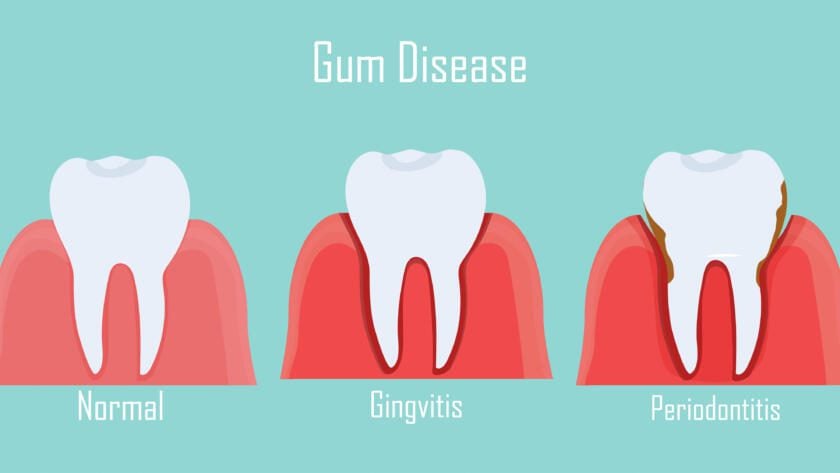
Gum disease is not a single condition. It develops in stages. The two primary stages are gingivitis and periodontitis.
The difference between them determines whether the condition is reversible — or whether permanent damage has already begun.
What Is Gingivitis?
Gingivitis is the earliest…
When patients plan for crowns, bridges, implants, or full-mouth reconstruction, attention usually centers on the tooth being repaired.
Dentists begin somewhere else.
Before any major dental treatment, the health of the gums and supporting bone must be evaluated. These tissues determine whether restorative work will remain stable for years — or fail prematurely.
Gum health…
Gum disease is often thought of as a local dental problem—bleeding gums, bad breath, or loose teeth. Clinically, however, periodontal disease is a chronic inflammatory condition. Inflammation in the mouth does not remain isolated to the mouth.
Over the past two decades, research has examined links between periodontal disease and broader health outcomes. Gum disease…
Gum disease rarely starts with pain.
In its early stages, inflammation of the gums is often mild, painless, and easy to dismiss. Many patients assume what they are noticing is normal or temporary. It usually is not.
Early gum disease (gingivitis) can progress quietly. The signs are subtle, but they are clinically meaningful.
Early Gum…
Scaling and root planing (or SRP, often called a “deep cleaning”) is a common treatment for gum disease. Despite the name, SRP is not simply a more thorough version of a regular dental cleaning. It is treatment for bacterial infection below the gumline.
Understanding what SRP does — and what it does not complete on…
If your gums bleed when you brush or floss, it can be tempting to assume it’s normal—especially if it’s mild, painless, or something you’ve noticed for years.
It isn’t.
Bleeding gums are one of the earliest and most reliable signs of gum inflammation. In most cases, that inflammation is caused by bacterial plaque accumulating along…