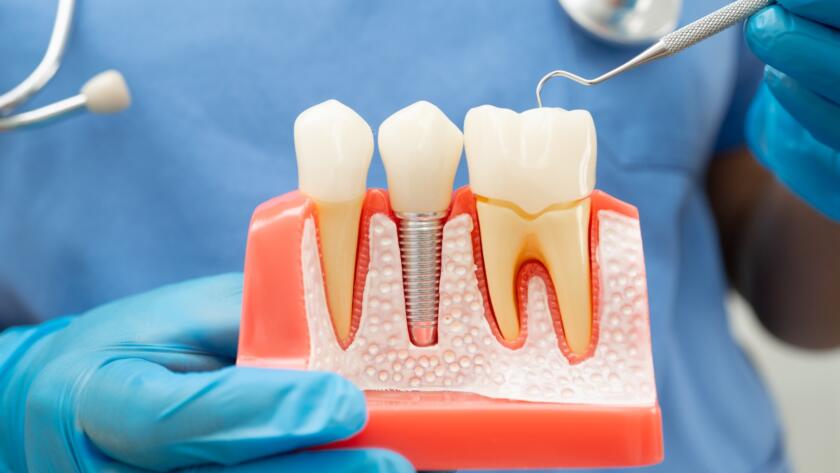
Dental implants are designed to function for many years. With careful planning, healthy tissue, stable bone, and regular maintenance, many implants remain comfortable and functional long term.
But implants are not completely free from future problems. Years after treatment, complications can still develop around the implant, the surrounding bone, the gum tissue, or the crown…

Before placing a dental implant, dentists need to determine whether the jawbone can support the implant safely and predictably over time.
Patients are sometimes told they “do not have enough bone” for an implant. In some situations, that is accurate. In others, the issue is more specific: the bone may be too narrow, too short,…
When several teeth are missing or failing, patients often assume there are only two possibilities:
replace individual teeth with separate implants
remove everything and move directly to All-on-X treatment
In reality, the decision is usually more complex.
Some patients are good candidates for replacing only specific teeth while maintaining the rest of the dentition. Others…
Being told you may need All-on-X treatment can feel overwhelming, especially if you still have some natural teeth remaining.
Many patients wonder:
Do all of my teeth really need to come out, or can some of them still be saved?
The answer depends on more than whether each individual tooth can technically be repaired. Dentists…
Choosing a dental implant provider is not just about finding someone who offers implants. It’s about understanding how implant treatment is planned, how surgical and restorative decisions are made, and what affects long-term implant stability.
Dental implants involve multiple steps—diagnosis, surgery, healing, and maintenance. Decisions made during planning, placement, and maintenance can affect implant stability,…
Most dental implant cases are straightforward.
But not all are.
In some situations, what appears to be a simple missing tooth involves additional planning, different treatment steps, or a longer process than expected.
This is where patients often hear terms like “more complex case”—without a clear explanation of what that actually means.
Understanding what affects…
After a tooth is removed—or when one needs to be—many patients are not ready to decide on a dental implant right away.
That’s a normal position to be in.
In most cases, the situation is not urgent in the sense that a decision must be made immediately. But it also isn’t something that stays unchanged…
After dental implant placement, one of the most common practical questions is:
When can I eat normally again?
In most cases, patients begin with soft foods and gradually return to normal eating within about 1–2 weeks. The exact timing depends on the location of the implant and how healing progresses.
This article explains how eating changes…
What Is All-on-X?
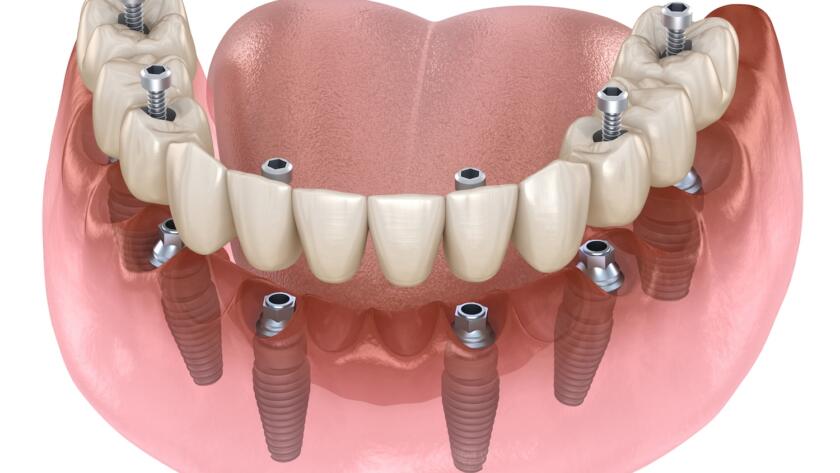
All-on-X is a method of replacing an entire upper or lower set of teeth with a fixed (non-removable) bridge supported by dental implants.
Instead of placing one implant per tooth, a small number of implants (often 4–6) are used to support a full arch of teeth.
The result is a stable, fixed set…