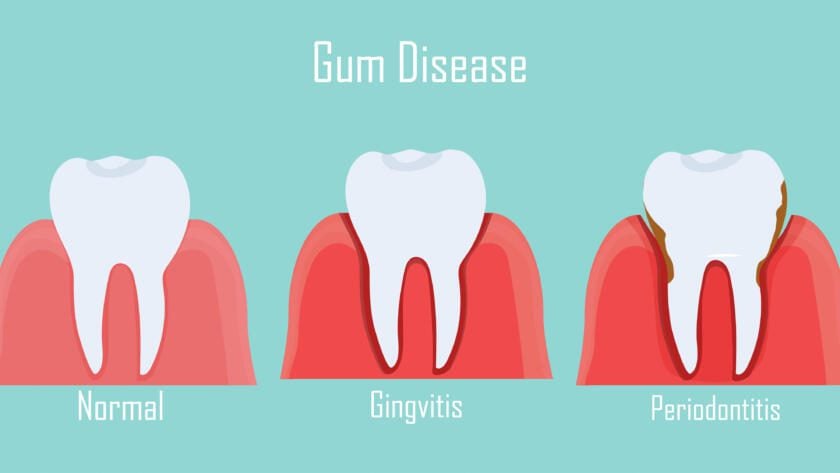
If your gums bleed when you brush or floss, it can be tempting to assume it’s normal—especially if it’s mild, painless, or something you’ve noticed for years.
It isn’t.
Bleeding gums are one of the earliest and most reliable signs of gum inflammation. In most cases, that inflammation is caused by bacterial plaque accumulating along…
f you’re missing a tooth and comparing replacement options, the two most common recommendations are dental implants and dental bridges. While both restore appearance and function, dentists evaluate them very differently. The recommendation is based on biology, long-term predictability, and the condition of the surrounding teeth—not simply convenience.
This guide explains how dentists compare implants and bridges so…
After a tooth extraction, it’s normal to have questions about healing, discomfort, and what is considered typical versus concerning. While recovery varies from person to person, most extractions heal predictably when the area is protected and allowed to recover naturally.
This page provides general information about what people commonly experience after a tooth extraction. It does…
Dental implants are one of the most reliable ways to replace missing teeth—but they are not the right solution for every patient or every situation. Implant candidacy depends on anatomy, oral health, medical factors, and the ability to heal predictably over time.
Understanding how dentists evaluate implant candidacy helps you interpret recommendations and make informed…
Dental implants are often described as a long-term solution for missing teeth. But their longevity depends less on the implant itself and more on how it is planned, placed, restored, and maintained over time.
This article explains what dentists mean by implant “lifespan,” which parts last longest, and which factors most strongly influence durability.
What…
Dental implant placement is a surgical procedure, and recovery is a normal part of the process. What often creates uncertainty is not the recovery itself, but the wide range of assumptions patients hear—from expectations of severe downtime to claims that recovery is barely noticeable.
In reality, recovery after dental implant placement is usually predictable and structured when…
If you’ve been told that a tooth cannot be saved, the recommendation can feel abrupt—especially if the tooth doesn’t hurt much or still looks intact. Many patients assume that as long as a tooth is present, there must be another repair option.
In dentistry, there is a point at which preserving a tooth is no…
Wisdom Tooth Discomfort Is Common — Infection Requires Closer Attention
Wisdom teeth often cause discomfort, especially when they are erupting, partially erupted, or difficult to clean. Not all wisdom tooth pain means infection. However, infection is one of the most common reasons wisdom tooth pain becomes urgent.
The difference is not always how much something…
Dental Pain Is a Signal, Not the Problem Itself
Dental pain rarely appears without a reason. It is usually a signal that something has changed—inside a tooth, around the gums, or in the surrounding bone.
What makes dental pain difficult to interpret is that it does not always progress in a straight line. Pain may…