
Before placing a dental implant, dentists need to determine whether the jawbone can support the implant safely and predictably over time.
Patients are sometimes told they “do not have enough bone” for an implant. In some situations, that is accurate. In others, the issue is more specific: the bone may be too narrow, too short, too soft, too close to the sinus or nerve, or shaped in a way that makes ideal implant positioning more difficult.
Implant planning is not simply about whether bone is present. Dentists evaluate whether the bone can support the implant in the right position, under normal chewing forces, with healthy surrounding tissue and long-term stability.
This article explains what dentists evaluate before recommending dental implants and why careful planning matters.
Implant Planning Is About Long-Term Predictability
A dental implant needs to do more than fit into the jawbone.
For long-term success, the implant should be positioned so it can support the final tooth properly, tolerate chewing forces, remain maintainable over time, and preserve healthy surrounding bone and gum tissue.
Dentists often evaluate bone width, bone height, bone density, sinus and nerve position, bone loss patterns, gum health, bite forces, and the planned position of the final tooth.
Two patients may both have “bone loss,” but their treatment options can still differ significantly depending on where the bone loss occurred, how severe it is, and what type of restoration is being planned.
For a broader overview of implant candidacy, see: Are Dental Implants Right for Everyone?
Bone Width: Is the Jawbone Thick Enough?
Bone width refers to the thickness of the jawbone where the implant would be placed.
This is one of the most important parts of implant evaluation because implants need surrounding bone support on multiple sides. After a tooth is removed, the jawbone often shrinks inward over time. This can make implant placement more difficult, especially when teeth have been missing for many months or years.
If the bone becomes too narrow, dentists may need to consider:
- bone grafting
- a different implant size
- staged treatment
- a different implant position
- alternative replacement options
The goal is not simply to place an implant wherever bone remains. The goal is to place the implant where it can support a stable, functional, and maintainable final restoration.
Bone Height: Is There Enough Vertical Space?
Bone height refers to the vertical amount of bone available for implant placement.
This becomes especially important near anatomical structures such as:
- the sinus cavity in the upper jaw
- the major nerve running through the lower jaw
In some areas, there may appear to be adequate bone on a traditional dental X-ray, but additional evaluation may show that the usable space is actually limited.
When bone height is insufficient, treatment planning may involve:
- shorter implants
- angled implants
- sinus augmentation
- bone grafting
- staged treatment
- alternative restorative approaches
The appropriate solution depends on the patient’s anatomy, bite forces, and long-term treatment goals.
Bone Density: Is the Bone Strong Enough?
Bone quality matters in addition to bone quantity.
Some bone is dense and stable. Other bone is softer and less supportive initially. Softer bone does not automatically prevent implant treatment, but it can affect how the procedure is planned.
Bone density may influence:
- implant selection
- implant size
- surgical technique
- healing time
- initial implant stability
- whether immediate placement is appropriate
- how long the implant should heal before restoration
For example, the upper back jaw often contains softer bone than the lower jaw. This can affect healing timelines and treatment sequencing.
Sinus Evaluation in the Upper Jaw
The upper back jaw often requires additional planning because the sinus cavity sits above the roots of the upper premolars and molars.
After upper teeth are lost, two things commonly happen:
- the jawbone gradually shrinks
- the sinus expands downward
Together, these changes can reduce the amount of usable bone available for implants.
If the sinus is close to the planned implant site, dentists may evaluate whether procedures such as sinus augmentation or grafting are needed to improve support and positioning.
This does not automatically mean implants are impossible. It means the anatomy requires more detailed planning.
Nerve Evaluation in the Lower Jaw
The lower jaw contains a major nerve that provides sensation to the lower lip and chin.
When implants are placed in the lower back jaw, dentists carefully evaluate the location of this nerve and maintain appropriate safety margins around it.
This helps reduce the risk of complications involving numbness or altered sensation after surgery.
Bone Loss Patterns Matter
Bone loss does not occur uniformly.
Some patients lose mostly bone width. Others lose mostly height. Some develop irregular defects caused by infection, gum disease, trauma, or long-term tooth loss.
Dentists evaluate:
- where bone has been lost
- how severe the loss is
- whether the remaining bone is structurally useful
- whether the implant can be positioned ideally
- whether grafting would improve long-term predictability
This is one reason implant treatment can vary significantly between patients.
A straightforward implant case may involve strong, stable bone with minimal anatomical limitations. More complex cases may involve severe bone loss, narrow ridges, sinus limitations, nerve proximity, bite complications, or multiple missing teeth.
CBCT Imaging Helps Evaluate Implant Anatomy
Because implant planning involves evaluating bone in three dimensions, dentists often use CBCT imaging to assess:
- bone width
- bone height
- sinus location
- nerve location
- bone shape and angulation
- nearby anatomical structures
This helps dentists determine whether implants can be positioned safely and predictably. It can also help identify whether grafting, altered implant positioning, or another treatment approach should be considered.
For more detail about implant imaging and digital planning, see: Dental Implant Planning: Why 3D Imaging Matters
When Bone Grafting Becomes Necessary
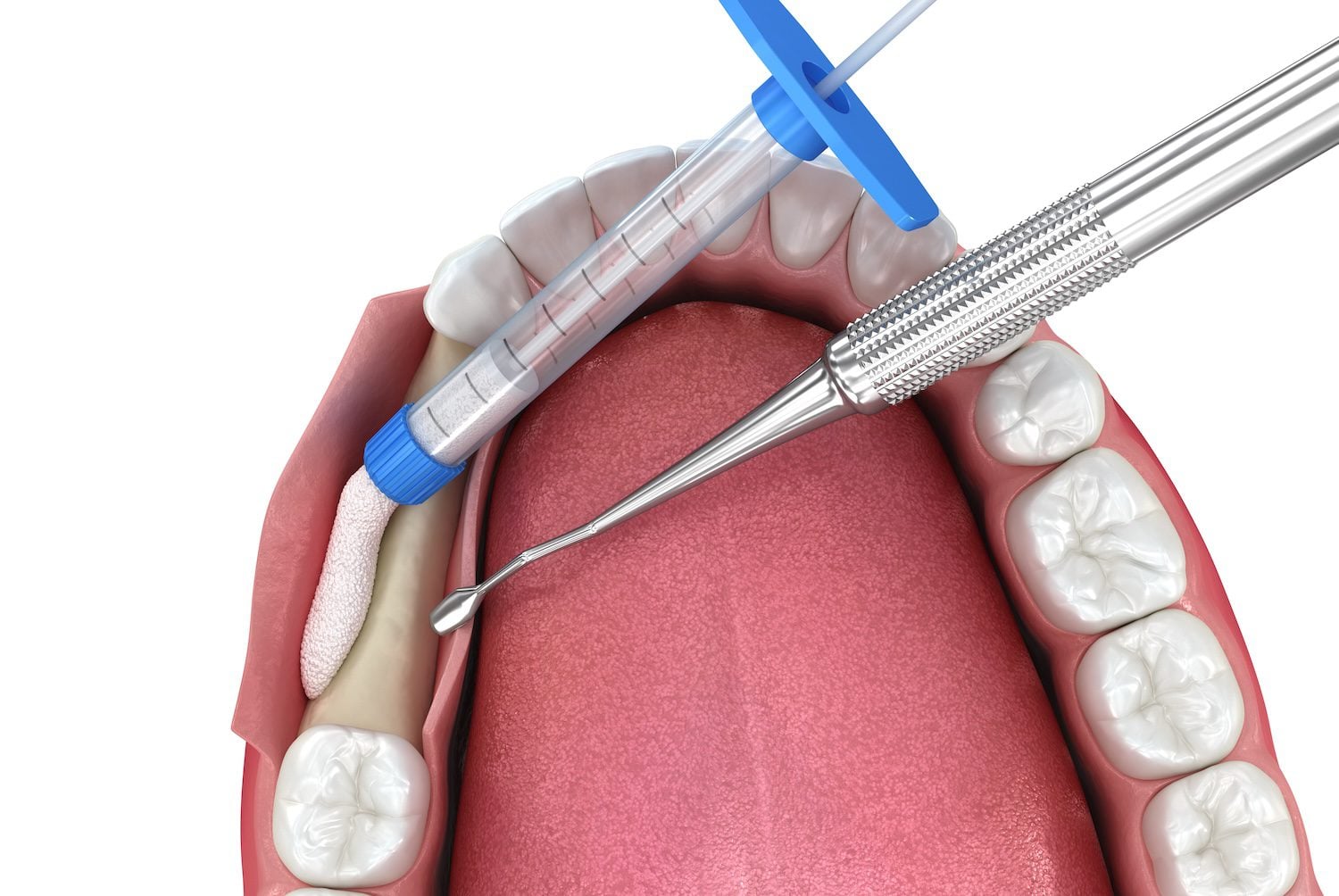
Bone grafting may be recommended when the existing bone cannot support an implant predictably in the desired position.
This may occur because of:
- long-term tooth loss
- gum disease
- infection-related bone destruction
- traumatic extraction
- severe bone shrinkage
- naturally thin jaw anatomy
The purpose of grafting is not simply to “add bone.” The goal is to create a more stable foundation for implant placement and long-term maintenance.
Some patients require only minor grafting. Others may need larger augmentation procedures before implants can be placed safely.
For more detail, see: Bone Grafting for Dental Implants: When and Why It’s Needed.
Why Implant Positioning Matters So Much
Implants should not be placed simply where bone happens to exist.
The position of the implant affects:
- chewing function
- crown shape
- gum support
- cleanability
- appearance
- force distribution
- long-term maintenance
- future complication risk
Modern implant planning often begins with the final restoration in mind. Dentists first evaluate where the replacement tooth ideally belongs, then determine whether the bone can support an implant in that position.
Careful positioning generally improves long-term function, hygiene access, and restorative predictability.
When Bone Loss Changes Implant Options
Bone loss does not automatically mean implants are impossible.
However, it may change which treatment options are most predictable. Depending on the anatomy involved, options may include bone grafting, sinus augmentation, staged implant treatment, shorter implants, angled implants, or different tooth replacement approaches in more advanced cases.
The appropriate approach depends on the patient’s anatomy, goals, medical history, and long-term treatment plan.
For more detail, see: When Bone Loss Affects Dental Implant Options.
Final Thoughts
When dentists evaluate bone for dental implants, they are assessing much more than whether bone is simply present.
They are evaluating whether the implant can be positioned safely and function predictably over many years.
This includes evaluating:
- bone dimensions
- bone density
- nearby anatomy
- gum health
- bite forces
- implant positioning
- long-term maintainability
Careful planning helps identify anatomical limitations, improve implant positioning, and reduce avoidable risks.
To learn more about implant treatment options, visit our Dental Implants page.