
Bone Loss Changes Implant Options — Not Whether Replacement Is Possible
If you’ve been told you have bone loss in your jaw, it can sound like implants are no longer an option. In practice, bone loss mainly changes which implant approaches are appropriate and how treatment is staged. The correct plan depends on how much bone is missing, where it’s missing, and how your bite loads the area.
This article explains why bone loss occurs, how it can change implant planning, and what options may remain when bone is limited.
Why Bone Loss Happens After Tooth Loss
Jawbone volume is maintained by stimulation from teeth. After a tooth is lost, bone in that area typically resorbs over time. Common contributors:
- Time since extraction (progressive resorption)
- Gum disease (chronic inflammation accelerates bone loss)
- Prior infection or abscess
- Pressure from dentures in areas without teeth
- Upper back teeth anatomy (sinus expansion reduces available bone)
Bone loss is gradual and often unnoticed until implant planning begins.
How Dentists Evaluate Bone for Implants
IImplant planning is based on imaging, measurements, and long-term risk assessment, not visual inspection alone. Dentists evaluate the amount, shape, and quality of bone in the area where the implant would be placed.
This may include:
- 3D CBCT imaging to assess bone height, width, and density
- site-specific analysis, including front vs. back teeth and upper vs. lower jaw
- sinus and nerve proximity in posterior areas
- bite force and parafunction, such as clenching or grinding
- whether the implant can be positioned to support the final tooth predictably
These findings help determine whether implants can be placed in existing bone, whether grafting or staged treatment may be needed, or whether a different implant approach is more appropriate.
For a more detailed explanation of this process, see how dentists evaluate bone for dental implants.
Implant Options When Bone Is Limited
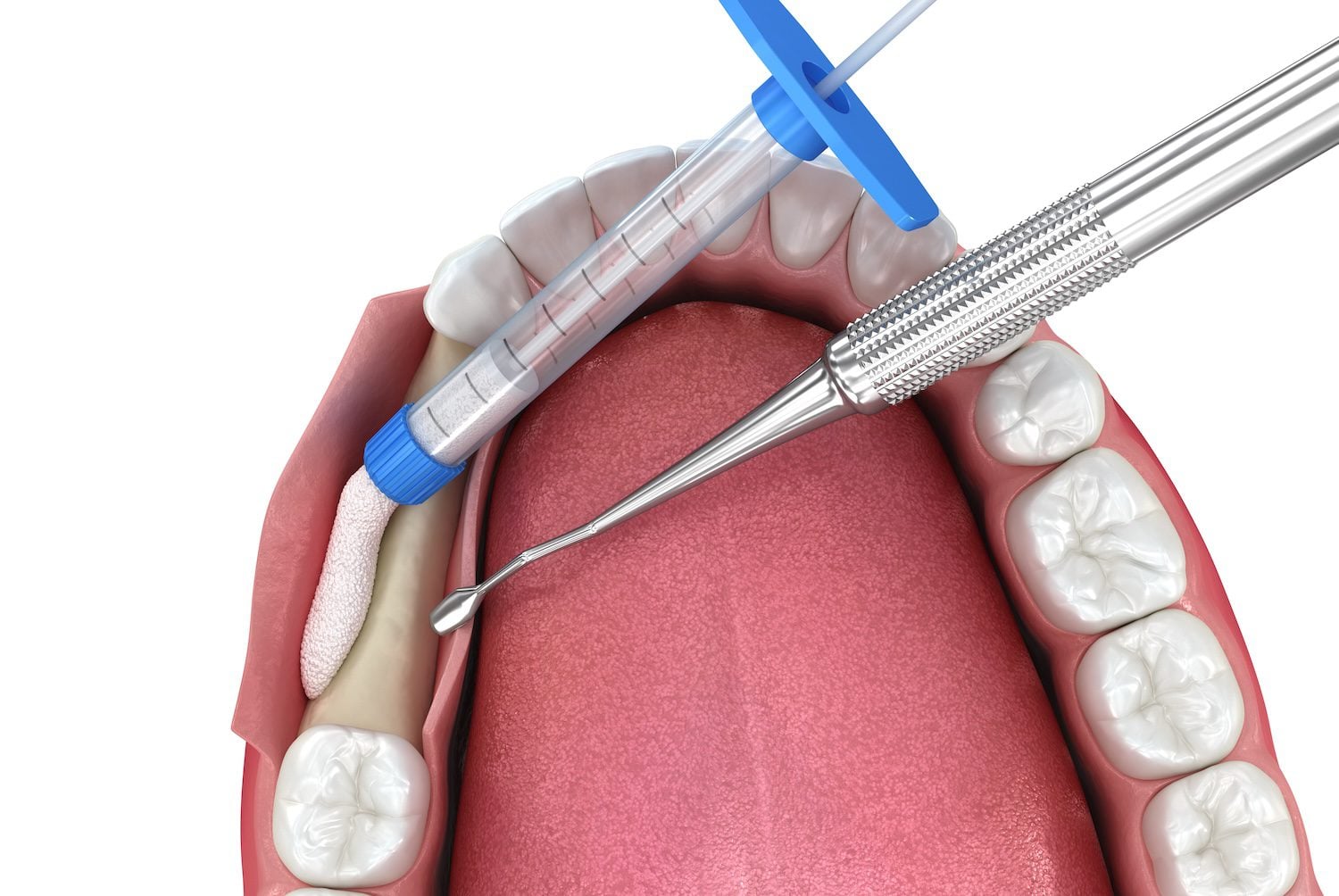
1) Conventional Implants With Bone Grafting
When bone volume is inadequate for standard implants, bone grafting can rebuild support:
- Socket grafting (at extraction)
- Ridge augmentation (increase width/height)
- Sinus lift (upper back teeth)
Implications:
- Adds stages and healing time
- Improves implant positioning and load distribution
- Increases total treatment time and cost relative to placing implants in existing bone
For a detailed explanation of how dentists determine whether to use bone grafting to support dental implants, see Bone Grafting for Dental Implants: When and Why It’s Needed.
2) Short or Angled Implants (Case-Dependent)
In selected cases, shorter implants or angled placement can avoid anatomical limits.
Implications:
- Not appropriate for all bone qualities or bite patterns
- Requires precise planning and experience
- May constrain crown design or long-term load distribution
3) All-on-X (Full-Arch Implants)
For patients missing many teeth or using dentures, All-on-X can engage denser bone with angled implants and may reduce the need for extensive grafting.
Implications:
- Full-arch solution (not for single missing teeth)
- Higher upfront cost
- Ongoing maintenance and hygiene are critical
Practical distinction: Full-arch systems can remain viable even when bone loss makes multiple individual implants less predictable, because forces are distributed across fewer, strategically placed implants.
When Bone Loss Changes What Is Advisable (Not Just What Is Possible)
A plan can be technically possible but clinically unfavorable if bone distribution creates:
- Higher long-term failure risk
- Unfavorable load concentration on a single implant
- Aesthetic compromise due to thin tissue or recession
- Hygiene challenges that increase peri-implant disease risk
This explains why different dentists may recommend different approaches: the variation is usually risk assessment and long-term prognosis, not whether implants can be placed at all.
FAQs: Bone Loss and Dental Implants
Can bone regrow without treatment?
No. Post-extraction bone loss does not reverse on its own.
Is bone grafting predictable?
Generally predictable, but outcomes vary with biology, infection control, smoking status, and surgical technique.
Does waiting reduce options?
Often yes. Delays typically increase the amount of augmentation required or narrow available approaches.
What to Do If You’ve Been Told You “Don’t Have Enough Bone”
- Ask what imaging and measurements were used.
- Clarify whether grafting was considered and why it was or wasn’t advised.
- For multiple missing teeth, ask whether All-on-X was evaluated.
- Consider a second opinion if recommendations differ.
For planning details, see our Dental Implants page. For full-arch replacement, review All-on-X. New patients can start on the New Patients page to see what the first visit includes.
Bottom Line
Bone loss changes the treatment pathway for implants, not the underlying goal of tooth replacement. Modern planning offers multiple options with different timelines, costs, and risk profiles. The appropriate choice depends on anatomy, bite forces, and tolerance for staged treatment.