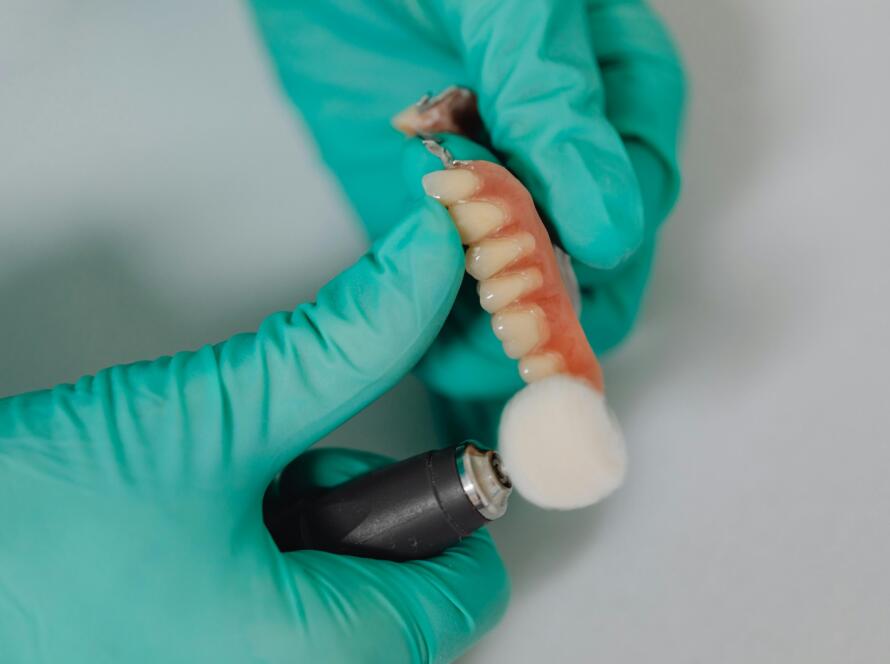

For a single missing tooth, dentists usually compare a single tooth dental implant and a removable partial denture. Both close the visible gap. The clinical decision is about tradeoffs: stability under bite forces, impact on adjacent teeth and bone, maintenance burden, service life, timeline, and cost structure.
Option 1: Single Tooth Dental Implant
A single tooth implant replaces the tooth root with a fixture placed in bone and a custom crown above the gumline.
Dentist-valued advantages
- Local bone preservation. Functional loading helps limit resorption at the missing-tooth site.
- No reliance on adjacent teeth. Neighboring teeth are not altered or used as anchors.
- High functional stability. Fixed restoration; closest analog to a natural tooth.
- Long service life when indications are met. Predictability is high with appropriate planning and maintenance.
Clinical constraints
- Surgical candidacy required. Adequate bone and controlled periodontal health; grafting may be indicated.
- Longer timeline. Healing phases often separate placement and final crown.
- Higher upfront cost. Lower ongoing maintenance is typical but not guaranteed.
Option 2: Removable Partial Denture
A partial denture replaces one (or more) missing teeth with a removable appliance supported by remaining teeth and soft tissue.
Dentist-valued advantages
- Lower initial cost. Often the most accessible entry option.
- Non-surgical pathway. Appropriate when surgery is contraindicated or declined.
- Shorter delivery timeline. Typically weeks.
Clinical constraints
- Loads adjacent teeth. Clasps/rests transfer forces to neighbors over time.
- No bone stimulation at the site. Resorption at the missing-tooth area continues.
- Fit variability and movement. Requires adjustments; comfort depends on anatomy and design.
- Higher maintenance cadence. Relines/repairs are common as tissues change.
How Dentists Compare the Tradeoffs
| Dimension | Single Tooth Implant | Partial Denture |
|---|---|---|
| Stability | Fixed | Removable; may shift |
| Impact on neighbors | Independent | Uses adjacent teeth |
| Bone at missing site | Helps preserve | Continues to resorb |
| Timeline | Longer | Shorter |
| Upfront cost | Higher | Lower |
| Ongoing maintenance | Routine hygiene + checks | Daily removal/cleaning; periodic refits |
| Longevity profile | Longer when indicated | More frequent replacement/repair |
Typical Recommendation Patterns
Dentists tend to favor an implant when:
- Bone volume is adequate (or grafting is acceptable).
- Adjacent teeth are intact and should not be loaded.
- Long-term stability and bone preservation are priorities.
- Timeline and higher initial cost are acceptable.
Dentists tend to favor a partial denture when:
- Surgery is contraindicated (medical risk, medications, healing concerns) or declined.
- Budget constraints prioritize lower initial cost.
- A rapid, interim replacement is needed.
- A removable appliance is acceptable to the patient.
Practical Factors That Change the Recommendation
- Location and bite forces. Posterior teeth experience higher loads; stability matters more functionally.
- Periodontal status. Active disease must be controlled before either option.
- Future sequencing. A partial denture may be planned as interim therapy before implant placement.
- Maintenance capacity. Removables require consistent removal/cleaning; implants require meticulous hygiene and professional maintenance.
Cost Framing
Clinicians separate upfront cost from total cost of ownership (adjustments, relines/repairs, replacement cycles, and secondary effects on neighboring teeth and bone). Lower initial cost can carry higher cumulative maintenance over time.
Bottom Line
Both options replace a single missing tooth. When surgical candidacy and timeline permit, dentists typically favor single tooth implants for stability and site preservation. Partial dentures remain appropriate when surgery is not suitable, speed is required, or lower upfront cost is the primary constraint. Final recommendations depend on anatomy, medical risk, and patient priorities.