

Dental implant success depends on more than the implant itself—it depends on how precisely it is placed. In many cases, guided implant surgery is used to improve accuracy, safety, and long-term outcomes by planning implant placement digitally before surgery begins.
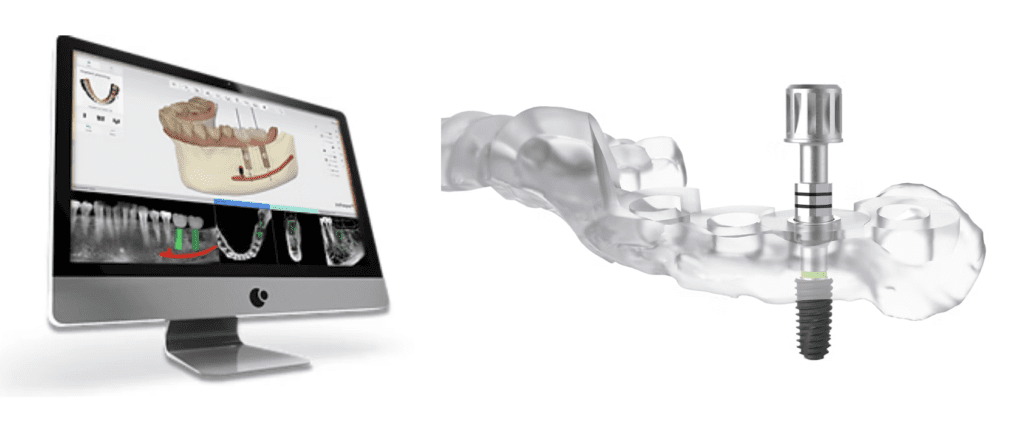
Guided implant surgery is a technique that uses 3D imaging and a custom surgical guide to place dental implants at a pre-planned angle and depth, improving accuracy and predictability.
Rather than relying only on visual judgment during the procedure, guided implant surgery allows your dentist to plan implant position in advance and then place the implant according to that plan.
What Is Guided Implant Surgery?
Guided implant surgery is a method of placing dental implants using digital 3D planning and a custom surgical guide.
The process typically includes:
- 3D imaging to evaluate bone, anatomy, and spacing
- Digital planning of implant position before surgery
- Fabrication of a custom guide to control depth, angle, and placement during surgery
This approach helps translate a detailed plan into precise execution, reducing variability during implant placement.
How Digital Planning Improves Accuracy and Safety
Advanced imaging and digital planning allow the dentist to evaluate:
- Bone volume and density
- Proximity to nerves and sinuses
- Ideal implant angulation for bite forces
- Crown position before surgery begins
According to the American Academy of Implant Dentistry, proper planning is a key factor in implant success and long-term stability. Digital planning helps ensure implants are placed in positions that support function, comfort, and longevity rather than convenience during surgery.
Because these decisions are made ahead of time, the procedure itself can be more controlled and predictable.
Guided vs Freehand Implant Placement
Dental implants can be placed using different techniques. The difference lies primarily in how much planning occurs before surgery.
| Feature | Guided Implant Surgery | Freehand Placement |
|---|---|---|
| Planning | Digital planning before surgery | Planning during surgery |
| Implant Position | Pre-determined | Decided intraoperatively |
| Safety Margins | Measured | Estimated |
| Consistency | More consistent | More variable |
| Predictability | Higher | Dependent on anatomy and conditions |
Freehand placement can be appropriate in certain situations. Guided implant surgery is designed to reduce variability and improve consistency, particularly in complex cases or areas near sensitive anatomy. This level of planning is especially important for full-arch implant cases such as All-on-X.
Why Implant Position Affects Long-Term Results
Implant placement influences more than just surgical success.
Precise positioning affects:
- How chewing forces are distributed
- How well the implant supports the final crown
- Long-term bone stability
- Ease of cleaning and maintenance
Clinical research published through National Library of Medicine has shown that implant positioning plays a role in biomechanical stability and long-term outcomes. Small differences in angle or depth can affect how an implant performs over time.
If you’re considering implants, you can learn more about our approach here → Dental Implants.
Does Guided Implant Surgery Affect Recovery?
Recovery varies based on the individual, the number of implants, and whether additional procedures are needed. In some cases, implants may be placed at the time of extraction.
Because guided implant surgery is planned in advance, it can support more controlled placement and may reduce unnecessary tissue disruption.
In some cases, this may contribute to:
- More efficient procedures
- Reduced surgical adjustment
- A smoother overall experience
Your dentist will explain what to expect based on your specific treatment plan.
Is Guided Implant Surgery More Expensive?
Guided implant surgery involves additional steps, including digital planning and custom guide fabrication. Some practices charge separately for this approach.
We believe that careful planning should improve outcomes—not simply increase cost. When guided placement is appropriate, it is incorporated into how we deliver implant care, with the goal of improving accuracy, safety, and long-term results rather than adding unnecessary fees.
This reflects our focus on predictable outcomes and responsible planning.
How We Plan Dental Implants
Every implant case is evaluated individually. When guided implant surgery is appropriate, digital planning and custom guides are used to improve precision and consistency.
Understanding how an implant is placed is an important part of making an informed decision—not just what the implant replaces.
Related pages:
FAQ: Guided Implant Surgery
Q: Is guided implant surgery always necessary?
A: No. Guided placement is most helpful when anatomy is complex, bone is limited, multiple implants are placed, or precision is critical for the final restoration. Some straightforward cases can be placed freehand.
Q: Is guided implant surgery safer than freehand placement?
A: Digital planning can improve safety margins around nerves and sinuses. Safety still depends on case selection, imaging quality, and surgical execution.
Q: Does guided implant surgery guarantee success?
A: No. Long-term success also depends on bone quality, healing, medical factors, restoration design, and maintenance. Guided placement improves predictability but does not eliminate risk.
Q: Can guided surgery reduce procedure time?
A: Planning occurs before surgery. In some cases this shortens chair time; in others, total time is similar because planning and guide fabrication add steps.
Q: Is guided implant surgery used for full-arch cases?
A: Yes. Digital planning and guides are commonly used in full-arch treatments to control implant angulation and prosthetic alignment.